
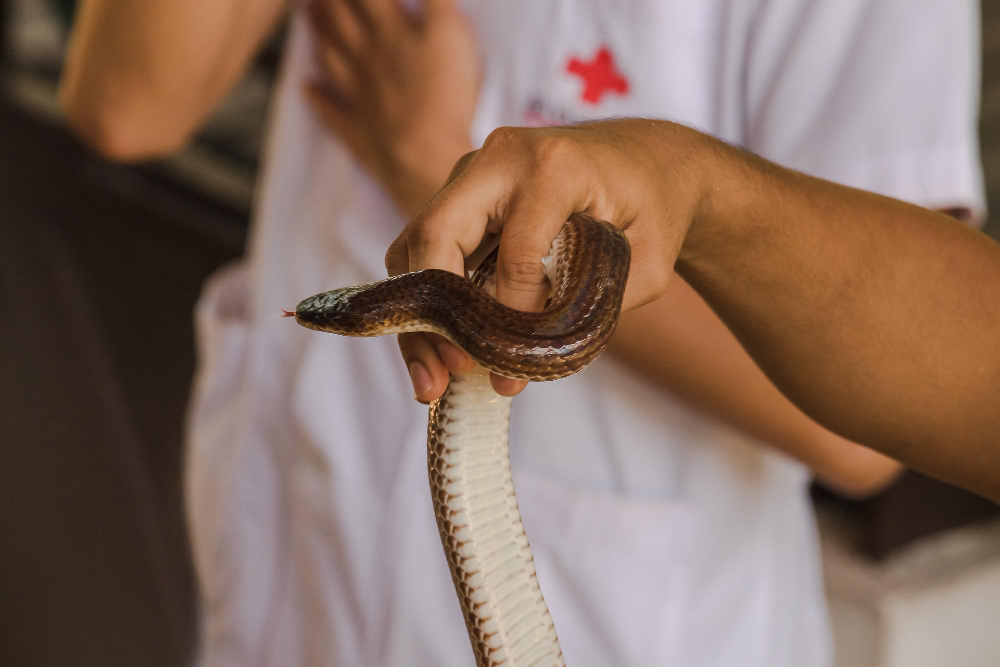
What is a Snake Bite?
A snake bite happens when a snake bites a person. Sometimes, the bite injects venom, which is a harmful poison. Snake bites can be dangerous, especially in rural or forested areas. Because quick action is vital, knowing snake bite first aid can save lives. In many places, snakes are common, so it is important to be prepared.
Common Symptoms of Snake Bite
After a snake bite, symptoms can appear quickly. However, not all bites are venomous. Still, you should watch for these signs:
Sometimes, symptoms like trouble speaking or drooping eyelids may also occur. If you notice any of these, act fast.
Immediate First Aid Steps
Quick and correct first aid for snake bite is crucial. Here are the steps you should follow:
Remember, snake bite first aid can make a big difference before help arrives.
What Not to Do After a Snake Bite
Some actions can make things worse. Therefore, avoid these common mistakes:
Instead, focus on getting medical help quickly.
When to Seek Emergency Care
Even if symptoms seem mild, you should always seek emergency care for snake bites. However, call for help right away if you notice:
In many cases, fast treatment can prevent serious problems.
Hospital Treatment and Recovery
At the hospital, doctors will check the bite and symptoms. Often, they may give antivenom, which helps stop the effects of venom. Other treatments can include fluids, pain relief, and wound care. Recovery time depends on the type of snake and how quickly you get help. Most people recover well with prompt care. However, follow your doctor’s advice for the best outcome.
Prevention Tips for Snake Bites
Although snake bites are scary, you can lower your risk. Here are some tips:
With these steps, you can help protect yourself and others.
Frequently Asked Questions (FAQs)
How can I tell if a snake is venomous?
It is hard to tell. Therefore, treat all unknown snake bites as serious and seek help.
Should I use a tourniquet for snake bite first aid?
No, do not use a tourniquet. It can cause more harm than good.
Can I treat a snake bite at home?
No, always seek emergency care for snake bites. Home remedies are not safe.
How fast do symptoms appear?
Symptoms can appear within minutes or hours. However, act quickly for the best chance of recovery.
If you or someone you know is bitten by a snake, seek emergency medical help immediately.
Consult Dr. Meenal Singh for emergency care